How Do AI Receptionists Work?
A plain-English walkthrough of how an AI receptionist answers a call, books appointments, and knows when to hand off to a human — no jargon.
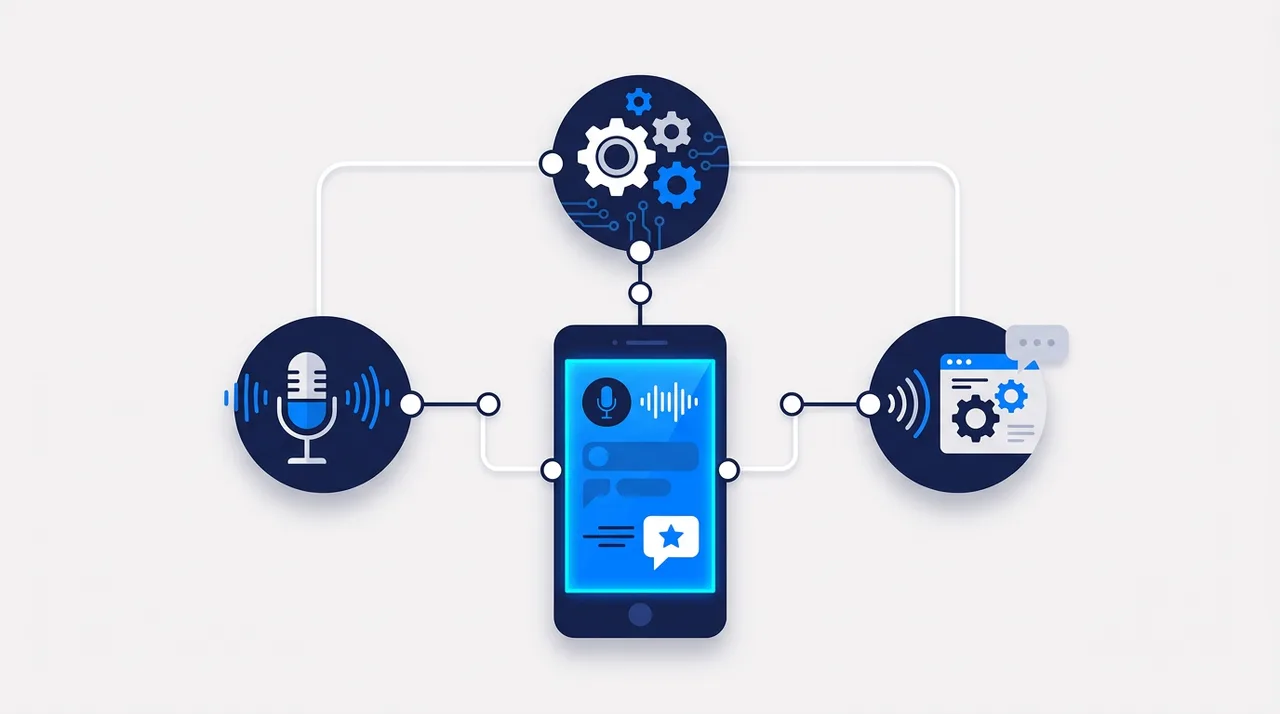
"AI receptionist" sounds futuristic, but once you see the pieces, how AI receptionists work is genuinely straightforward. This is a plain-English, no-jargon walkthrough of what happens from the moment a customer dials your number to the summary that lands in your inbox.
What an AI receptionist actually is
An AI receptionist is a voice agent that answers your business phone and handles the routine calls a front desk handles: questions about hours and services, booking and rescheduling, taking messages, and routing callers to the right person. It picks up every call, including the ones that come in at 9pm or while your team is already on another line.
It is not a recorded menu and not a chatbot bolted to a phone line. It's a conversation: the caller talks normally, and the agent talks back.
Walking through one call, start to finish
Picture a real call. A prospective patient dials a dental office at 7:40pm, after the front desk has gone home. The phone rings once. A natural voice answers, asks how it can help, hears "I chipped a tooth and need to come in," checks the calendar, offers two openings tomorrow morning, books the 9:15, texts a confirmation, and drops a summary into the practice's inbox. The caller hangs up having booked an appointment instead of leaving a voicemail nobody would hear until morning.
That whole call is a chain of five steps. Here's what each one is doing.
Step 1: The call comes in
You keep your existing business number. It gets forwarded to the AI voice agent, so nothing changes for your callers; they dial the same number they always have. The only difference they notice is that someone now answers every time, on the first or second ring, including nights and weekends.
Step 2: It understands what the caller wants
When the caller speaks, three things happen in about a second:
- Speech-to-text turns what they said into words the system can work with.
- A language model, the same family of AI behind modern chat assistants, reads those words and works out the caller's intent: book an appointment, ask a question, reach a specific person.
- Text-to-speech turns the agent's reply back into a natural-sounding voice.
That loop runs again for every back-and-forth in the call, fast enough that it feels like a normal conversation rather than a delay-ridden phone tree.
Step 3: It answers from your business, not generic facts
This is the step that separates a useful agent from a gimmick. Before it ever takes a call, the agent is trained on a knowledge base built from your business: your services, hours, location, pricing, policies, and the questions your front desk hears every day.
So when a caller asks "do you take my insurance?" or "how much is a first visit?", the agent answers the way your front desk would, from your real information. It isn't improvising or guessing from the open internet. If a question falls outside what it was given, a well-built agent says so and offers to take a message or transfer, rather than inventing an answer.
Step 4: It takes action — booking, routing, messaging
A receptionist that only talks isn't worth much. The agent is connected to your tools so it can actually do things during the call:
- Book, reschedule, or cancel against your live calendar.
- Qualify the lead by asking the intake questions you'd ask.
- Send a confirmation by text and a call summary to your inbox.
- Log the call in your CRM so nothing falls through.
These integrations are what turn a phone-answering demo into something that moves your actual schedule.
Step 5: It knows when to hand off to a human
A well-built agent is designed to recognize the calls it shouldn't handle, like an upset customer, a clinical or legal question, or anything genuinely unusual, and to warm-transfer to a person or take a detailed message instead. You set the escalation rules: which topics always go to a human, which numbers calls transfer to, what happens after hours. The point isn't to replace your team. It's to handle the routine majority so your people spend their time on the calls that actually need them.
What an AI receptionist still can't do well
Being honest about the limits matters more than the sales pitch. A few things a voice agent genuinely isn't the right tool for:
- Real judgment calls. A situation with no script, like an unhappy long-time customer, a sensitive complaint, or a one-off request, needs a person.
- Deep emotional conversations. The agent can be polite and calm, but it isn't a substitute for human empathy when a call needs it.
- Anything you haven't prepared it for. It answers from its knowledge base. Feed it thin information and it has thin answers.
We also recommend a short, honest disclosure at the start of the call that the caller is speaking with an AI assistant. In practice, callers rarely mind once they get a fast, helpful answer instead of voicemail, and you can compare the trade-offs directly in AI receptionist vs. a human receptionist.
Frequently asked questions
Will callers know they're talking to an AI? Modern voice agents sound natural and conversational, so it isn't always obvious. We recommend disclosing it briefly at the start of the call anyway. It's honest, and most callers care far more about getting a real answer than about who gave it.
How long does it take to set up an AI receptionist? Most agents go live within roughly one to two weeks. It isn't a months-long IT project; the time goes into scoping your call flows, writing scripts, and connecting your calendar and CRM. A dental practice is a good example of how quickly a focused setup comes together.
Can an AI receptionist book appointments? Yes. When it's connected to your calendar or scheduling software, it can book, reschedule, and cancel during the call, then send a text confirmation. Booking is one of the most common reasons businesses add one.
What happens if the AI can't answer a question? A well-built agent recognizes when a question is outside its knowledge or needs a human, and either takes a detailed message or warm-transfers the caller, based on the escalation rules you set. It should never guess.
The bottom line
An AI receptionist is a chain of well-understood parts — listen, understand, answer, act, hand off — assembled and trained around one specific business. The technology behind it is genuinely good now. The real work is scoping and tuning it to sound and behave like your front desk. Cost is the natural next question, and we cover what an AI receptionist costs in a separate guide.
Curious whether it fits your business? Book a free call and we'll walk you through exactly how it would handle your calls.